What Are Heat Networks?
Heat networks, sometimes called district heating, are a way of providing energy (usually heating and hot water) to homes and buildings using a shared system.
Used throughout Europe
Heat networks provide heating and hot water to homes, businesses, and public buildings from a central energy centre, distributing heat through insulated underground pipes to multiple connected sites – so individual boilers are no longer required within each building.
By using efficient technologies such as large-scale heat pumps, recovered heat, CHP, energy-from-waste and geothermal sources, they can reduce emissions, improve system efficiency, support long-term cost stability, and strengthen local energy resilience – making them an important part of the UK’s future energy infrastructure.
Why Heat Networks?
Heating homes, business and public buildings accounts for a large share of the UK’s energy use and carbon emissions. Heat networks offer a practical solution in places where individual low-carbon heating systems are not always the best option – such as flats, city centres, campuses and mixed-use developments.
Heat Networks help by:
- Lowering long-term energy costs through efficient, shared heat production
- Reducing gas consumption
- Using low-carbon and recovered heat sources that individual buildings cannot access alone
- Supporting energy security by using local heat sources where available
They also make it easier to upgrade energy systems over time. As cleaner technologies emerge, they can be added to the network without requiring costly changes in each connected building. This flexibility makes heat networks a long-term, future-proof investment.
The UK Government’s Warm Homes Plan recognises heat networks as a key way to deliver affordable, low-carbon heat in dense urban areas and places close to suitable heat sources.
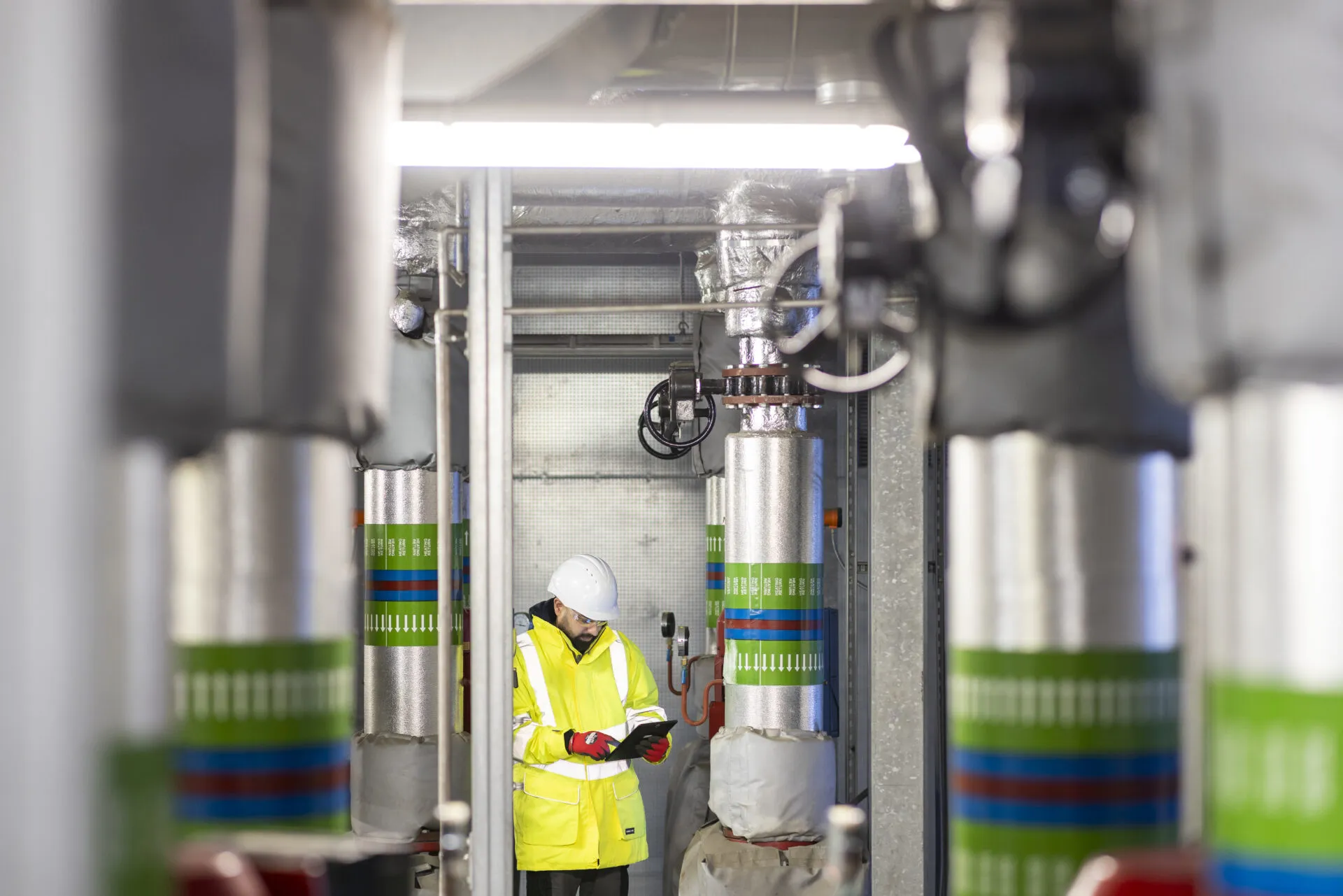
How Heat Networks Work
A heat network has three key components:
-
Energy Generation
Heat is produced at a central location using one or more energy sources. These can include large heat pumps, combined heat and power (CHP), biomass, recovered waste heat from industry or data centres, energy-from-waste plants, geothermal heat, or other technologies.
-
Distribution Network
Insulated underground pipes carry hot water (and sometimes chilled water when cooling is also supplied) from the energy centre, across the network, delivering reliable heating and cooling to connected buildings. This is also called the primary network.
-
Customer Interface
In each building, heat is usually transferred from the primary network into a building-level heat substation from which it is distributed internally (the secondary network). Finally, the tertiary system delivers heating and hot water within individual properties or commercial units via Heat interface units (HIUs) which control heat use in a similar way to a boiler. For customers, the experience feels like a conventional combi boiler system: you turn the heating on and off as needed, and hot water is always available.
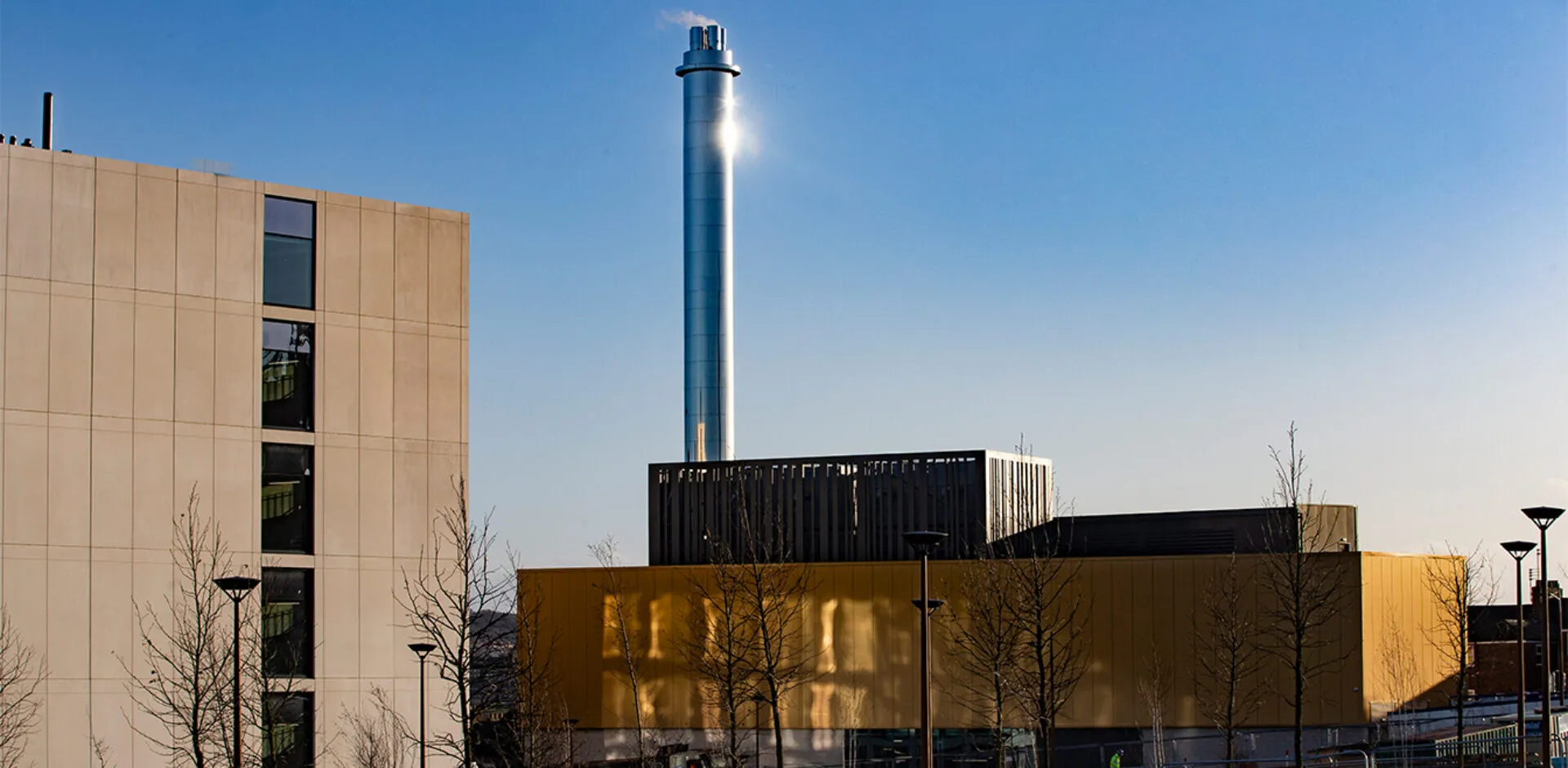
The Benefits of Heat Networks
Improved Energy Efficiency
Ease for Consumers
Future-proof
More Resilience
Lower Carbon
Heat Networks and the UK’s Transition to Net Zero
The UK Government has identified heat networks as critical infrastructure for decarbonising homes, public buildings and city centres. As heat network zoning rolls out nationally, more cities will designate areas where network solutions offer the lowest-carbon, most cost-effective heating pathway.
Bring Energy is already delivering some of the UK’s most advanced networks – from Queen Elizabeth Olympic Park in east London to recovered-heat systems in Coventry, while exploring the future potential of geothermal heat in Southampton and recovered-heat systems in Birmingham. Our networks demonstrate how local infrastructure can unlock major carbon savings while supporting vibrant, growing communities.
Frequently Asked Questions
Are heat networks reliable?
Are heat networks more expensive than traditional heating?
Do heat networks help reduce carbon emissions?
What buildings can connect to a heat network?
Will heat networks support future net-zero targets?
Yes. Heat networks are a central part of the UK’s transition to net zero. They are designed to work with existing low-carbon technologies and can be upgraded over time as cleaner options become available.
This means networks can continue to reduce emissions in the future without needing changes inside every connected building.
Are heat networks regulated?
Can heat networks provide cooling as well as heating?
What happens if a network grows over time?
Our Networks

Newcastle Helix
Supplying sustainable heat and cooling to a world-class innovation district.

Edinburgh St James
Low-carbon heating and cooling for one of Scotland’s largest mixed-use developments.
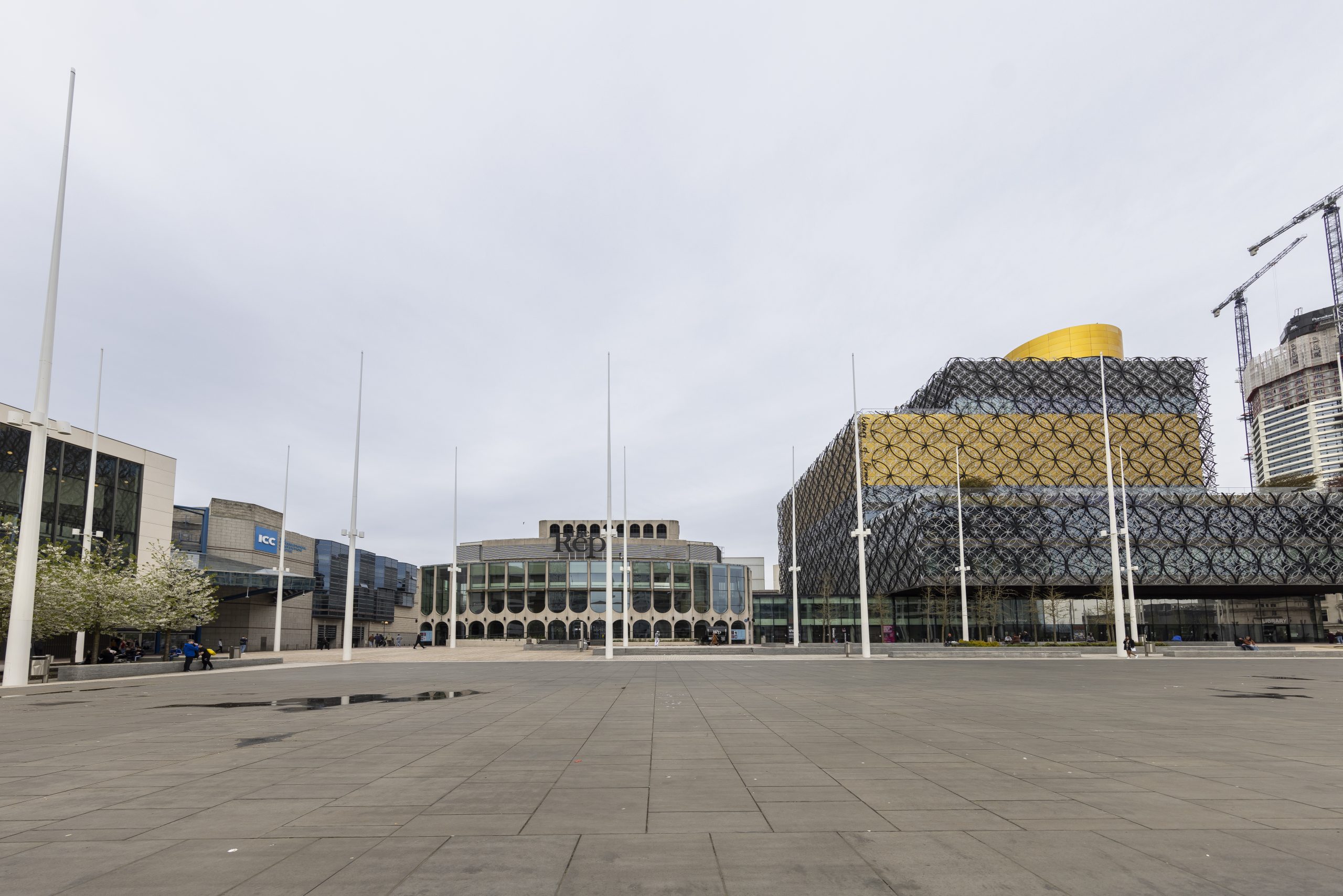
Birmingham District Energy
Delivering reliable low-carbon heat across Birmingham’s city-centre.